Showing posts with label Afghanistan. Show all posts

Thursday, 5 August 2010

NZ soldier killed, ‘Better ties’ with US ‘on cards’

By David

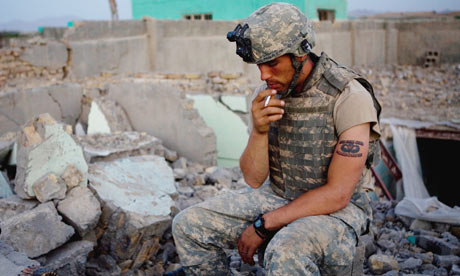
The first New Zealand soldier has been killed in Afghanistan.  

Labour leader Phil Goff (chief champion of this war), is reported to have said it was “not a day for politics”, which simply reflects the fact that on this, as with so many other issues, he has no political differences with the current government.

Green Party Defence Spokesman Keith Locke, once a prominent campaigner against New Zealand participation in this war, now claims to be “proud of the good peacekeeping and reconstruction work that our Provincial Reconstruction Team has done in Bamian Province, and we mourn the loss of one of its members.”

It’s an unfortunate time for Locke and the Greens to jump on the pro-war bandwagon. As UNITYblog posts over the last week have shown, support for the war is collapsing everywhere else. Over the last nine years the anti-war movement has been consistently correct in our predictions about what the results of this war would be.

Thousands of Afghanis have been killed, maimed and made homeless. And what for? They are not “liberated”, but subject to foreign occupation, corrupt central government and local war lords who are just as brutal and intolerant as the old Taliban. Many see the resistance grouped around the “new Taliban” as their only hope regaining national independence.

Osama Bin Laden (remember him?) has never been “bought to justice”, the US are no longer looking for him. Meanwhile, like Bin Laden, the war has crossed over in to Pakistan, killing hundreds and causing tens of thousands to flee their homes.

In the West the war has fed that cancerous growth of Islamophobic racism. Such racism goes hand-in-hand with imperialist war, based as it is on the assumption of the superior value of the life and culture of the “advanced” nations.

The right of the US (along with UK, Australia, New Zealand and the rest of the “coalition of the willing”) to invade other countries and rearrange them to the satisfaction of the corporate lobbyists at the State Department, bestowing the free market and puppet “democracy” is taken for granted.

Murdering 3000 people in the US on September 11, 2001 was a “crime against humanity”, but murdering many, many more people in Afghanistan, Iraq, Pakistan, Palestine, Lebanon and elsewhere is merely “collateral damage” and hardly worth worrying about.

The death of one soldier (occupying someone elses country) is treated as a national tragedy, but how many Afghans have been killed by New Zealand troops in nine years of war?

Of course the role of the NZDF in Afghanistan is not primarily killing Afghans, it’s providing support and cover for those who do. Under the guise of a “UN mandate” and “Provincial Reconstruction”, “our leaders” have deployed their forces to lend credibility to US imperialism, in return for closer trade and military ties to the US, (and a boost for Helen Clark’s career at the UN).

In this, the combined effort of Labour and National (oh, and the soldiers too), appears to be paying off. “Better ties with NZ on US cards”, according to a report on Stuff today, “including a step-up in military training and exercises between the two countries.”

MORE LINKS

Also worth checking out is this post from Socialist Aotearoa, which links to articles by Gordon Campbell and Afghan womens rights activist Malalai Joya.

Saturday, 31 July 2010

Shooting the messenger

By Mark Steel

Why are the British and US governments saying the leak of military documents about Afghanistan has “put our soldiers at risk?”

It’s us who’s been kept hidden from this information, not the Taliban. For example, many of the revelations are previously hidden details of civilian casualties, but Afghans in those areas probably already knew about those deaths.

I don’t suppose local insurgents have said “Well well, I’ve read the leaked documents, and you know that family whose house was bombed to rubble by an American plane, and the rest of the village arrived and wailed for three days and swore revenge and then there was a funeral that we all went to. Well it turns out they’re dead.”

Afghanistan: Thousands rally against occupation

Protest in Mazar-i-Sharif, July 10. 

Citizens rallied in two Afghan cities on July 10 and 11, chanting slogans against the occupying powers and the unpopular regime of President Hamid Karzai for failing to protect civilians.

On July 10, hundreds took to the streets of Mazar-i-Sharif to demand that all occupation forces leave.

The protest was organised after an artillery barrage from occupying NATO forces killed six civilians in Paktia province on July 8 and US troops killed two civilians in a pre-dawn raid in the city on July 7.

Protesters chanted slogans against occupation forces and Karzai.

Thursday, 29 July 2010

Guardian: Afghanistan war logs: Massive leak of secret files exposes truth of occupation

Nick Davies and David Leigh 
guardian.co.uk,

The war logs reveal civilian killings by coalition forces, secret efforts to eliminate Taliban and al-Qaida leaders, and discuss the involvement of Iran and Pakistan in supporting insurgents. Photograph: Max Whittaker/Corbis

A huge cache of secret US military files today provides a devastating portrait of the failing war in Afghanistan, revealing how coalition forces have killed hundreds of civilians in unreported incidents, Taliban attacks have soared and Nato commanders fear neighbouring Pakistan and Iran are fuelling the insurgency.

The disclosures come from more than 90,000 records of incidents and intelligence reports about the conflict obtained by the whistleblowers' website Wikileaks in one of the biggest leaks in US military history. The files, which were made available to the Guardian, the New York Times and the German weekly Der Spiegel, give a blow-by-blow account of the fighting over the last six years, which has so far cost the lives of more than 320 British and more than 1,000 US troops.

Their publication comes amid mounting concern that Barack Obama's "surge" strategy is failing and as coalition troops hunt for two US naval personnel captured by the Taliban south of Kabul on Friday.

The war logs also detail:

• How a secret "black" unit of special forces hunts down Taliban leaders for "kill or capture" without trial.

• How the US covered up evidence that the Taliban have acquired deadly surface-to-air missiles.

• How the coalition is increasingly using deadly Reaper drones to hunt and kill Taliban targets by remote control from a base in Nevada.

• How the Taliban have caused growing carnage with a massive escalation of their roadside bombing campaign, which has killed more than 2,000 civilians to date.

Wednesday, 10 February 2010

Afghanistan: war without end

British soldier punished for speaking truth By Mark Steel Politicians and newspapers love to revere a war hero from Afghanistan. It’s strange, then, that they haven’t got round to Lance-Corporal Joe Glenton, the British soldier who has been arrested for addressing an anti-war protest in October. His crime was to conclude that the war was making matters worse, it was immoral to carry on fighting and to say this publicly. So they put him in a military jail, presumably to stop him doing it again. 

As a soldier, this must leave you in a state of confusion, as I doubt whether the initial briefing includes a section that goes: “Now then, men, during your tour of duty with the British Army, I implore you to remain vigilant and wary at all times of the wily foes known as the British Army.” 
 
More recent articles on Afghanistan and the 'war without end' • Anti-war soldier Joe Glenton’s charges dropped • Afghan war kills three kids a day • Bribe plan for the Taliban • Blackwater is operating in Pakistan • Guantanamo: Murder, lies and a cover-up • Blair: No regrets and I’d bomb Iran

Tuesday, 28 July 2009

Keep SAS out of Afghanistan

SAS combat troops “look set to return to Afghanistan” according to an NZPA article, that reports on Prime Minister John Key’s response to a request for more troops for the war from the US. The PM says he is “somewhat sympathetic” to the request.
 The mistaken belief that the people from Afghanistan had something to do with the September 11 attacks, or that the aim of the war was to capture Osama Bin Laden, has meant the war in Afghanistan has always had more support in this country, and more importantly in the US, than the war in Iraq. The previous Labour Government was able to exploit this, using troop commitments in Afghanistan to cosy up to the US. National will no doubt continue this policy. 
As the NZPA the article reminds us, there are already “About 140 army, navy and air force personnel are involved in New Zealand’s provincial reconstruction team (PRT) operating in Bamiyan province. The team has been there since 2003 and is committed until September 2010 so far.” And as Peace Movement Aotearoa (who forwarded the the NZPA report) points out:
SAS troops previously deployed to Afghanistan have been integrated with other Special Forces in the Combined Joint Special Operations Task Force under US military command. Along with US Special Forces, “six foreign nations including New Zealand and Australia, also assigned some of their best ‘hunters and killers’ to the group” which is headquartered near Bagram air base. Clearly not deployments that could be regarded as peacekeeping by any stretch of the imagination ...

It will be even easier for National to continue New Zealand’s involvement, now that Obama is working to promote Afghanistan as the “good war” in contrast to the mess in Iraq. But the truth is the occupation of Afghanistan has no more justification and is no more successful than the occupation of Iraq. In both cases the US and it’s allies, including NZ, are slaughtering tens of thousands of innocent people, while strengthening the “extremeists” they claim to be trying to stop. As Malalai Joya, a women’s rights actavist elected to the Afghan parliament in 2005, recently stated:
Almost eight years after the Taliban regime was toppled, our hopes for a truly democratic and independent Afghanistan have been betrayed by the continued domination of fundamentalists and by a brutal occupation that ultimately serves only American strategic interests in the region.
It is long past time for New Zealand to end it’s support for the war crime that is the occupation of Afghanistan by withdrawing all troops. As Joya argued in another recent interview, with Australia’s Green Left Weekly (GLW):
“But what’s going on today is like civil war. People are squashed today between two enemies: an internal and an external enemy ... “That’s why its better if the foreign troops leave as soon as possible. People are saying: we don’t expect anything good from you, just stop your wrongdoing. “Bombs falling from the sky are killing our people. On the ground, the Northern Alliance and Taliban are killing our people. From both sides our people are the victims — especially women and children.” She cited a May 4 US air-strike in her native Farah province. “The mainstream media wants to throw dust in the eyes of the world. Over 150 people were killed. I spoke to a young woman who lost 20 members of her own family. “This was a massacre. I was banned from giving a press conference. But the US government and media said only 20 were killed. “Our people hate warlords, don’t support Karzai and his puppet government of war criminals and drug lords who now want to negotiate with the Taliban. Our people hate the Taliban. “If the troops withdraw, then it is easier fight with one enemy. Now we are fighting with two enemies: occupation forces and these criminals.

A village elder from Granai, Afghanistan, points to the grave where his sister and her children are buried. Over 150 people were killed when the village was bombed by the US Air Force on May 4. Photo by Guy Smallman.

For more details about the massacre on the May 4 bombing of Granai village in Farah province, see the interview with Photojournalist Guy Smallman “the only Western reporter to visit the village” in Britain’s Socialist Worker newspaper. For an overview of what’s happening in Afghanistan today, take a look at ‘The Afghan war — unjust and unwinnable’ in the latest Green Left Weekly. Also of interest Reactions to US President Barak Obama’s recent speech “to the Muslim World”, from Noam Chomsky and Robert Fisk.

Wednesday, 18 June 2008

NZ troops in Afghanistan are supporting an imperialist takeover of the country

There are 64,000 foreign troops in Afghanistan - a strategic military occupation of another country by the US and its allies.

Around 200 New Zealand troops are part of the occupying force in Afghanistan. Labour government minister Phil Goff says there's a "strong likelihood" that the troops will stay until at least 2010.

The government's justification is that they're "helping to rebuild the country". The article below on the involvement of Canada's armed forces makes it clear that this is no "peace mission", but a naked imperialist enterprise to control a strategic area of the world - in the eyes the US and its allies. And at the same time support the corporate plunder of Afghanistan's mineral resources. While billions of dollars stand to be made by overseas companies the Afghanistan people continue to live in desperate poverty.

Labour's support for America's global war must end. Bring NZ troops back from Afghanistan.

Canadian workers demand immediate end to war in Afghanistan

by Michael Skinner
from LINKS - International Journal of Socialist Renewal

On 29 May 2009, the delegates at the national convention of the Canadian Labour Congress (CLC), representing more than 3 million workers from every region of Canada and Quebec, voted overwhelmingly to demand that the government of Canada immediately end its participation in the illegal war in Afghanistan.

Bush meets NZ troops in Afghanistan

Laura Bush, wife of US president George W Bush, meets New Zealand troops in Afghanistan on Sunday 8 June 2008. NZ troops took over the US compound in Bamiyan in 2003.

Photo from the official White House website

Tuesday, 15 April 2008

Afghanistan troop increase deplorable

Media Release GLOBAL PEACE & JUSTICE AUCKLAND www.gpja.pl.net 14 April 2008 The government decision to increase New Zealand troops in Afghanistan is deplorable and can only compound the chaos and violence across the country. The 18 additional New Zealand troops, like the existing contingent, have no place in Afghanistan. In the six and a half years since New Zealand took part in the illegal invasion and occupation of Afghanistan that country has been plunged into violence and chaos for which New Zealand must share responsibility. We are part of the problem in Afghanistan. New Zealand, along with all foreign troops, should pull out immediately. Foreign occupation will never bring stability or democracy but instead strengthens the hands of various warlords and authoritarian groups. Civil society will only get a footing when the occupation ends. New Zealand is in Afghanistan solely to appease the United States which led the invasion in the wake of terrorist attacks in New York in 2001. It’s time we told our very, very, very good friend we will no longer back up their imperial adventures and grab for resources. In the meantime Afghanistan needs money to help rebuild. Afghanistan has plenty of engineers and carpenters to help with reconstruction. They need money – not New Zealand troops or those of any other country.

Tuesday, 1 January 2008

Canadian workers demand immediate end to war in Afghanistan

by Michael Skinner from LINKS - International Journal of Socialist Renewal On 29 May 2009, the delegates at the national convention of the Canadian Labour Congress (CLC), representing more than 3 million workers from every region of Canada and Quebec, voted overwhelmingly to demand that the government of Canada immediately end its participation in the illegal war in Afghanistan. This CLC demand represents a significant consolidation of labour power. Several national unions, notably the Canadian Union of Postal Workers (CUPW) and the Canadian Union of Public Employees (CUPE), had already adopted policies to oppose Canada's participation in the war in Afghanistan. However, some powerful unions whose members work in the rapidly expanding Canadian military and development industries could profit from continuing the war. The women and men of these unions made the difficult decision to stand in solidarity with the working people of Afghanistan rather than act on self-interest. The Afghan war and the Canadian military The ongoing war in Afghanistan continues to kill uncounted thousands of Afghan civilians and cause immeasurable suffering due to horrendous injuries, the displacement of people from their homes and livelihoods, home invasions, arbitrary arrests and torture, sexual abuse and the general humiliation of Afghans. This is an illegal war that cannot be justified by a few extra jobs for Canadian workers. Since the war in Afghanistan began, Canada has become the sixth largest military exporter in the world, according to data collected by the US Congressional Research Service. Canada is now behind only the USA, Russia, the UK, Germany and China in export volume. The US manufactures more than all other military manufacturers combined, so comparing Canada's military industrial complex to the US mega-industry is ridiculous. But, Canada trails China – number five on the list – by only a hundred million dollars worth of exports in an industry that brings billions of dollars into Canada. No one knows exactly how many billions of dollars military exports bring into Canada though. Why not? Because, for the past four years, the Canadian government, citing security concerns, has refused to release much of the data regarding the export of military products to the US – our biggest customer. Canada's own military spending has risen considerably. Since the war began in 2001, Canada rose from the position of 16th to 13th biggest military spender in the world, and from 7th to 6th within NATO, according to a Canadian Centre for Policy Alternatives report. Canada's defence budget projects a 37 per cent increase in spending from 2001 to 2010. The Canadian Association of Defence and Security Industries (CADSI) represents more than 500 companies. In an interview with a CBC journalist, CADSI president Tim Page claimed his industry represents about 70,000 jobs in over 177 federal ridings [electorates/electoral constituencies]. This may not seem like a large number of workers, but it represents significant political power. Many of these high-tech jobs are among the best in the country. However, the workers who build the weapons and everything else needed for warfare, as well as the service workers who make the Canadian state function, recognise that it is the shareholders who profit most from the rising fortunes of the companies in Canada's military industrial complex. Corporations such as GM Canada, Bombardier, Bell Helicopter, SNC-Lavalin, CAE Electronics, Pratt & Whitney Canada, Canadian Marconi and Colt Canada are only a few of the Canadian-based military suppliers profiting from the war in Afghanistan. Canadian development aid in Afghanistan The Canadian development industry also profits from the war and occupation. The 1 billion dollars Canada has "pledged'' to spend on development in Afghanistan, from 2001 to 2011, pales in comparison to the 7.2 billion dollars already spent on the military mission. Nonetheless, a billion dollars is a significant sum. However, most development spending returns to Canada as salaries and expenses. Manufacturers as well as service providers such as construction contractors and airlines profit significantly from the development industry – while the little development spending that actually does reach Afghanistan benefits few Afghans. When our research group toured five Afghan provinces in 2007, we were appalled by the miserable conditions most Afghans must live in. Even in the safest areas of the country, where there is no excuse for the occupying forces' failure to reconstruct essential infrastructure, many Afghans do not have even the barest essentials of clean water and adequate sanitation. In Kabul, where the international forces have occupied the city since 2001, less than 29 per cent of the people have access to clean drinking water, according to reports by the Afghanistan Research and Evaluation Unit. Peter McKay, Canada's minister of defence, frequently claims that more than 6 million Afghan children – one third of them girls – have been enrolled in school. However, his claim is not substantiated by Afghan researchers. Girls represent only 3 per cent of students, according to the Afghanistan Independent Human Rights Commission. The children of poor families cannot afford school; they must work to survive. The Afghanistan Research and Evaluation Unit claims this fact especially inhibits girls from going to school. When we interviewed people in Afghanistan, their experiences of development sounded very much like what Michael Ignatieff had described in his book Empire Lite in 2003. Ignatieff stated: "The rhetoric about helping Afghanistan stand on its own two feet does not square with the hard interest that each Western government has in financing, not the Afghans, but its own national relief organisations. ...These fly a nation's flag over some road or school that a politician back home can take credit for. ... the international's first priority is building their own capacity – increasing their budgets and giving themselves good jobs.'' Since becoming a politician, Ignatieff no longer talks about these issues, but Afghans see this reality every day. Commercial exploitation Despite the fact there is no systemic development of the basic infrastructure necessary for human survival in Afghanistan, massive commercial developments proceed at a rapid pace. The biggest development to date is the Aynak copper mine just a few kilometres from Kabul. This rich mine site was auctioned, in late 2007, to the Chinese metallurgical corporation MCC for a price of more than 3 billion US dollars. The Aynak deposit is the first of more than 1400 state-owned mineral deposits in Afghanistan slated for privatisation in the near future. A Soviet geological survey in the 1970s found – and US and British surveys since 2001 have confirmed – massive deposits of almost every kind of mineral wealth exist in Afghanistan, such as gold, iron, uranium and copper, as well as hydrocarbons, especially coal. Afghanistan is also one of few locations on Earth where the rare element tantalum, also known as coltan, is found. Tantalum is essential in the manufacture of cell phones and laptop computers. The largest previously known source is in the Democratic Republic of Congo, where tantalum mining played a part in the most destructive war, in terms of human casualties, since WWII. Canadian mining giants are competing with US, British, Russian and Chinese companies in a scramble for the rich mineral prizes found in Afghanistan. Financial predictions for the Afghan mining industry are in the unfathomable hundreds of billions to trillions of dollars. But, as an article by Antony Benham in the October 2007 issue of Nature notes, it is unlikely much of this wealth will benefit many Afghans. Development of the transportation and energy infrastructure needed by the mining industry is rapidly proceeding, while ordinary Afghans suffer without the most basic necessities of life. Some sceptics claim that even the electricity to be transported by a transmission network currently under construction funded by the Asian Development Bank is not likely destined for the millions of Afghans without electricity, but will instead be sucked up by electricity hungry ore-processing plants. Whether it is here in Canada, in Latin America, in Africa, throughout Asia, as it is now in Afghanistan, the Aboriginal peoples who live on the land are perceived to stand in the way of what we in the so-called developed world call "development''. The environmental devastation that can be caused by resource extraction is well known, but this is a fact known better by those people directly affected who rely on their land for their livelihood than by anyone else. However, the disciplinary power of the modern state is being used to counter any protest, eliminate all resistance, and clear the land of Aboriginal Peoples wherever it is deemed necessary. The new Afghan theocratic state The destruction of the Taliban regime by US armed forces in 2001 effectively silenced opposition and effectively re-instituted a theocratic regime. A theocratic state was first imposed on Afghans in 1992 when the US helped the mujaheddin gain power by financing their war with billions of dollars against the secular Soviet-backed government. US President Jimmy Carter initially began providing military and other support for the mujaheddin Islamic revolutionaries on 3 July 1979, which then drew the Soviet military into Afghanistan on 25 December 1979. In coming to power, the mujaheddin declared Afghanistan an Islamic republic. The ouster of the mujaheddin by the Taliban in 1996 brought an even greater degree of social and political repression for Afghans, and intensified the theocratic features of the Afghanistan state, often through brutal means. Secular Afghans, those of other faiths, and Muslims who believe in a separation of state and religion have been profoundly disenfranchised by the theocratic state that first gained support from the Western powers in the 1990s. They have remained so by the new theocratic state re-established, under the puppet leadership of President Karzai, by a handful of Western leaders in the Bonn Agreement of 2001. The Bonn Agreement was instituted despite a UN Security Council recommendation issued several weeks earlier that urged that "the new Afghan government should respect the human rights of all Afghan people, regardless of gender, ethnicity or religion''. The Bonn Agreement accomplished, among others, three objectives with profoundly adverse consequences for many Afghans. First, it rewarded the mujaheddin warlords for their decades of services to the USA. Second, it promised the mujaheddin impunity for the many horrendous war crimes they had committed since 1979, which continue to this day during the US-led occupation. Third, it re-instituted the theocratic state as a means of social control. The US State Department reports: "The government requires all citizens to profess a religious affiliation and assumes all Afghans to be Muslim. According to Islamic law, conversion from Islam is punishable by death.'' The US State Department also reports that socialism is illegal in the Islamic Republic of Afghanistan, because socialists are atheists. Afghan political opponents of many progressive stripes must remain underground fearing retribution from both the Taliban insurgents and the ruling mujaheddin regime. In essence, the only substantive difference between the Taliban and mujaheddin regimes is that one is an intolerant authoritarian theocratic regime bent on resistance to the new world order and the other is an intolerant authoritarian theocratic regime willing and well prepared to profit from engagement with the new world order. Now that the workers of Canada and Quebec have officially declared our solidarity with Afghan workers, it is time to begin building bridges to join our struggles against the new authoritarianism and theocracy in Afghanistan and Western and Canadian imperialism. Michael Skinner is a researcher at the York Centre for International and Security Studies and a PhD candidate in the Department of Political Science, York University. In 2007, Skinner and Afghan-Canadian researcher Hamayon Rastgar, representing the Afghanistan Canada Research Group, travelled throughout much of Afghanistan. They listened to Afghan intellectuals, opposition politicians, and particularly the ordinary Afghan workers and peasant farmers whose views are not represented in the Canadian media (read dispatches on TUAW website). You can see a short video of this research, Searching for Development in Afghanistan at www.youtube.com/watch?v=Re6dJtplTUo. Contact: skinnerm@yorku.ca. This article first appeared in The Bullet, the Socialist Project of Canada's e-bulletin.