Tax Justice media release
28 October 2011
“The Occupy Movement is protesting the injustice of the world’s 99% having to bear the costs of a financial crisis caused by an elite few,” says Vaughan Gunson, Tax Justice spokesperson.
“The best mechanism for making the super-rich 1% pay is a financial transaction tax, or Robin Hood Tax,” says Gunson. “It’s very exciting to see that the global movement for this tax which targets banks, big corporates and financial speculators is growing.”
The Robin Hood Tax international day of action on Saturday 29 October is timed to put pressure on the leaders of the G20 before their summit meeting in Cannes on 3 November. In New Zealand, actions are being organised in Wellington, Auckland, and Christchurch.
“Tax Justice has been campaigning over the last year for financial speculation to be taxed. It’s criminal that the profits of speculators go untaxed, while ordinary New Zealanders are taxed every which way,” says Gunson.
The Tax Justice petition signed by 40,000 New Zealanders was presented to Parliament on 16 August. The petition calls for GST to be removed from food and a tax placed on financial speculation instead.
“Politicians in New Zealand need to respond to the global movement and start looking at how we can introduce a Robin Hood Tax in New Zealand,” says Gunson.
Tax Justice would like to see the parties of the left come together on tax policy. “A broad coalition that brings together left parties inside and outside of Parliament, along with unions and other grassroots organisations, could achieve a decisive shift towards a more just fairer tax system,” says Gunson.
“The beauty of financial transaction taxes is that they can target the super-rich who aren’t paying enough tax; it’s almost impossible to avoid; and modern technology makes it a simple and low cost form of tax collection,” says Gunson.
Tax Justice has produced a Fact Sheet on Financial Transactions Taxes and their feasibility for New Zealand. To download PDF click here.
For more information on the Tax Justice campaign go to www.nogstonfood.org
Friday, 28 October 2011


Saturday, 22 October 2011
Diary of an occupation — 7 days at #occupymelbourne
 |
| Occupy Melbourne, City Square, Day 2, October 16. Photo: occupymelbourne.org |
Green Left Weekly’s Sue Bolton has been part of the Occupy Melbourne protest since it began on October 15. Below she recounts the past week of the occupation in Melbourne’s City Square, which was broken up by a fierce police assault on October 21.
Day 5: Still going strong
We are still going strong with about 45 to 50 tents in City Square. I estimate there are about 100 people camping each night with many others staying until late in the night.
The occupation has been set up as a well-established occupation with a 24-hour roster for the info desk and the kitchen. The kitchen is feeding homeless people who also use the square.
The first general assembly passed a motion to welcome the homeless people who use the square. The kitchen has dispensed with meal rosters and is cooking 24-hours a day.
Now a People’s Cinema is being set up and there’s even a People's Library and a Free Clothes Store.
The first general assembly voted that it be a child-friendly space and there are families with children who are occupying.
Throughout each day, numerous people drop in to find out what the occupation is all about. There’s a lot of curiosity but also public support.
The slogan of the campaign, that “We are the 99% against the 1%” is very political, so most people coming to the occupation to browse around the stalls are wanting to have big discussions about the future of society.
Thursday, 20 October 2011
Occupy Wellington: A focus for the 99%
By Grant Brookes
“Why are they protesting?” ask the baffled pundits on TV. Meanwhile, the rest of the world asks: “What took you so long?”
“Why are they protesting?” ask the baffled pundits on TV. Meanwhile, the rest of the world asks: “What took you so long?”
 | |||
| Naomi Klein |
With comments like this, campaigning journalist Naomi Klein has captured the essence of the mushrooming movement against corporate greed which began on Wall Street (http://www.naomiklein.org/articles/2011/10/occupy-wall-street-most-important-thing-world-now).
The movement is expressing the feelings of a global majority denied a voice in the media and in the corridors of power.
It spread to Aotearoa on October 15, when occupations began in Auckland, Wellington, Christchuch, Dunedin, New Plymouth and elsewhere.
“I’ve been to a lot of protests for good causes”, said Dougal, on Day One of the Wellington Occupation. “But it’s often felt like I was part of an embattled minority. This is different”.
With their broad embrace of a myriad of issues, and organising democratically through general assemblies, the occupations around New Zealand have attracted supporters from all walks of life – even as they confound newshounds looking for figureheads, spokespeople and official media releases.
 |
| Occupy Wellington Circle |
Around 300 people marched on the NZX Stock Exchange building on Wellington’s waterfront on Saturday. The protest ended with an open microphone, where people got up and talked about why they had come.
An early childhood teacher spoke of how she suddenly found herself in poverty after being made redundant (http://www.youtube.com/watch?feature=player_embedded&v=yqnVqUYrPp0#!), following the National government’s decision to cut $400 million from early childhood education.
An IT consultant talked about how he and his partner have been earning up to $200,000 a year, but still can’t get ahead. He wondered aloud how those on the minimum wage could get by.
A beneficiary spoke of being unable to get a job, despite her university qualifications. “I can't even get a fucking job as a taxi driver”, she said. “I want a fucking revolution!” (http://www.youtube.com/watch?v=m2o7YX4vYRE).
 |
| Celia Wade Brown |
Then on Sunday, Wellington Mayor Celia Wade-Brown visited the occupation and expressed support.
The occupation has been gifted a whakatauki by local Maori, to express our acknowledgement of tangata whenua as the original occupiers of the land: “Me noho tahi, tena pea ka tika” ('Come sit together, and everything will come right').
With backing from such a cross-section of society, we truly are representative of the 99%.
The occupations have shown the ability of people to come together and create cooperative communities. In Wellington, general assemblies are meeting daily at 10am and 6pm, with a different person facilitating each time. Notes from each assembly are being posted at: http://www.coactivate.org/projects/occupywellington/blog/.
A group has been formed to organise food and other supplies to sustain the occupation. A communications and media team has been set up (individuals have produced articles like, 'Multimedia: Occupy Wellington Sets Up Camp In Civic Square' http://www.scoop.co.nz/stories/HL1110/S00188/multimedia-occupy-wellington-sets-up-camp-in-civic-square.htm and 'Occupy Aotearoa: A brief summary' http://www.scoop.co.nz/stories/HL1110/S00208/occupy-aotearoa-a-brief-summary.htm). A first aid team is forming, along with a roster of people to show hospitality to newcomers, rules for noise control, and a programme of educational workshops and entertainment.
And as we come together, we have also begun to grapple with what exactly is wrong with the world ruled by, and for, the 1% - and to talk about how we can change it, so it works for everyone.
UNITYblog spoke with people occupying Civic Square in Wellington about why they were there, and what they though could be achieved by the occupation.
 |
| Nati |
“I came down here to support the movements around the world – people that are fed up with everything, basically. I think there are a lot of people who don’t really know why they’re here, but they know that something is wrong and they want to change it.
“There are tons of things we can mention – the economic system, the way the world moves, the pyramidal structure that we have. We know that there are thousands of things wrong, so it’s more about coming together to develop a proposal.
“We need to focus on solidarity with others, on humanity, going back to the basic needs and basic values that are completely forgotten in our society, like helping each other. And solidarity with the planet, ecological resources. It’s probably going to take years.
“But it's good to stand and say, I know that there are things that are wrong, to just stand and say I am seeing this, I'm not blind. I'm coming here to stand in front of others and say, hey, look at this, let's try to change it.
“We can think about the power being held by governments, or by corporations as it is now, but the power is from the people, at the beginning. We are the consumers, and we are the workers. So we have the power. We are making the rules here.”
Sarah is a nurse and midwife.
“I think the occupation is about raising awareness of the current problems in the world. We can wake a lot more ordinary people up, and get people to actually look at the system that's facing them, and start to think about that more deeply, and about ways in which we can effect change.
“And particularly, we're coming up to an election. We've got such a great divide in NZ between the rich and poor. And we know that the bigger the gap between rich and poor, the poorer the society is. There's a lot more crime, and violence, we need to find a way to merge that. There are new political parties springing up, so that's a potential way forward.
“There are those who would argue we need to completely collapse the system, and move onto something entirely different, such as a resource-based economy (http://en.wikipedia.org/wiki/Jacque_Fresco#Resource-based_economy). The fact is we're all one humanity living on one planet with finite resources. So that's another way.
“Some people are arguing we should go back to the gold standard (http://en.wikipedia.org/wiki/Gold_standard). So there's lots of ideas, and the more people are involved, the more that evolution can take place. Ideas can join in the giant soup of creation, and come up with something new.”
Monday, 17 October 2011
The Occupations: This time it's different
by Joel Hildebrandt
If you know me, you
know I’ve been on many, many marches. Let’s be honest – it gets
a little boring. You march & yell and sing and chat with fellow
protesters on the street. You arrive at your destination and some
designated speakers take the mike and – well, it's boring. People &
energy fizzle away. And then what?
Yesterday at Aotea
Square in the centre of Auckland was different. Way different. Sure,
we marched and shouted and showed off for the media and got to the
Square and someone took the mike and they said... Welcome to your
occupation. From now on you are in control. We will decide everything
together.
They passed out a
brochure on consensus with hand signals and what they mean: agree,
disagree (but not that strongly), disagree enough to block consensus,
process concern. Hey, I live in cohousing, we know what those signals
mean! Green card yes, orange card not so much, red card no way... I
was in the middle of a People’s General Assembly, and something
inside me came back to life. Every proposal that the organizers had
come up with was approved, via hand signals, by the Assembly. A
different person was coordinating each Working Group, and
participants were invited to join the Groups: food, medical, legal,
town planning, media, etc. Proposals were requested from the
Assembly. Where the tents would be set up, approved by the Assembly.
I mean, it’s one thing to use consensus in an intentional community
of 32 households. Seeing it work so effectively among a group of
strangers is really inspiring! Support for Occupy Wall Street,
unanimous consent.
 |
| Voting at the Auckland General Assembly |
If
you haven’t been down there, to Queen Street or Wall Street or Sol
or wherever, you have to live it to believe it. Naomi Klein says this
is “The most important thing in the world right now”. I agree.
Here’s why:
#It’s
leaderless. No one is in charge, and everyone is. In some cases
(Madrid, Barcelona...) this means hundreds of thousands of people are
making decisions by consensus.
#It’s
inclusive. Everyone is welcome. Everyone can have a say. And unlike
so many movements, it is not divisive.
#It
is democratic. All decisions are made by everyone.
#It
is sustained. It does not fizzle after a couple of hours; it stays
there in Zucotti Park, or La Puerta del Sol, or wherever, day after
day.
#It
is peaceful. The protesters do not break windows, or attack police,
or even yell obscenities. They are letting the cops be the violent
ones, which garners them support and publicity.
#It
models the change that is needed. By being all those things, it shows
that people can run things democratically, inclusively, peacefully,
and successfully – even in really large numbers.
The
media don’t know how to cover this. They keep looking for leaders,
and a single cause or demand, and when they don't find them they tell
us we are disorganized. But that’s because they don’t get it.
It’s not what they’ve seen before and know how to sell – it’s
different!
I
was even skeptical, until I saw it in action. If you can’t do that,
check out this inspiring video from NYC (shot in Washington Square
Park): http://www.youtube.com/watch?v=6dtD8RnGaRQ
– using consensus at NY General Assembly.
If
you want to see how big this is globally, have a look at
http://www.occupystreams.org/ 120 different occupations are listed
around the world; you can peek into any one of them. And that’s
nowhere near all of them; Auckland (for instance) is not up there
yet. You can check out #Occupy Auckland photos at:
http://www.occupyauckland.org/photos
Can
we change the world this way? Time will tell. Many of us hope so, for
the world cannot go on as it is now. Can the necessary changes be
made some other way? I don’t see that happening anywhere, and that
is exactly the point. The politicians are busy bailing out the huge
corporations while they shove austerity down our throats. I don’t
think anyone else has the will or the means to stop it, turn it
around. It’s up to us.
Democracia
real ya! – Real democracy now!
Sunday, 16 October 2011
Occupy Auckland day 1
By David
‘We
are the 99%, we are the 99%...’
‘And
so are you!’ someone added, calling out to the many on-lookers.
‘Join
us,’ others called, and people did.
Two
French rugby supporters clapped their hands in approval. ‘We have
the same problem in France’ they said. They too
were the 99%.

There
were many veteran protests of course (some perhaps wearing their
‘Returned Protester Association badges that were handed out at the
recent celebrations of the 30th Anniversary of the Springbok Tour),
as well as those drawn in via recently emerged movements like the
student protests at Auckland University or the Mana party. There were
those who had protested before (but not for a while) and many who
were taking to the streets for the first time.
All
inspired by Occupy Wall Street, a protest that was more than just
marching from A to B, the idea of being part of a global movement,
the start of something new.
 What
are the issues?
What
are the issues?

The policy
of not having a list of demands has infuriated many critics and more
that a few supporters of the movement. But it seems to have worked.
Importantly,
it has allowed groups and individuals to bring their own concerns,
and I’m sure it will encourage people to think about how these
diverse issues are linked to corporate domination. Many would agree
with the sentiments of the Aucklander whose placard said ‘I’m
here for so many reasons’.
Some of
the reasons expressed in the placards and banners and Facebook
comments:
* The
wealth gap between the rich and the rest, growing ever wider as real
wages stagnate or fall, while productivity and profits soar.
* The slow
response and lack of preparation to the Rena oil spill, which was the
long predicted consequence of the deregulation of the shipping
industry.
*
Unemployment, scapegoating of beneficences and the lack of
opportunity even for skilled and educated.
* The
expansion of coal mining and oil drilling, which threatens more oil
spills, when accelerating climate change means we should be moving
away from fossil fuel extraction and cutting CO2 emissions.
* The
failure of the Crown to honour the Treaty’s commitment to tino
rangatiratanga, leaving Maori dispossessed in their own land.
* And,
last but not least, capitalism, corporate control and the corruption
of democracy by the rich elite.
Media
 Despite
the general assumption that the mainstream media would either not
cover the protests or simply dismiss them, some of the coverage,
particularly on the TV3
and NZ Herald websites has
generally been good. Stuff
(Dominion, Press etc) on the other hand has been poor, claiming
splits and disorganisation in the Wellington movement and posting a
rambling, poorly edited amalgam of local and international coverage
focusing on a movie star’s alleged attendance at the Auckland
protest.
Despite
the general assumption that the mainstream media would either not
cover the protests or simply dismiss them, some of the coverage,
particularly on the TV3
and NZ Herald websites has
generally been good. Stuff
(Dominion, Press etc) on the other hand has been poor, claiming
splits and disorganisation in the Wellington movement and posting a
rambling, poorly edited amalgam of local and international coverage
focusing on a movie star’s alleged attendance at the Auckland
protest.

Earlier in the day the Herald suggested that 2000 people were planning to attend the Auckland event, taking the number ‘attending’ on the Facebook event page literally. This is usually not a good idea. On the train into town a friend speculated that this was a deliberate ploy by the Herald to discredit the movement when far fewer turned out. I just assumed the reporter had never organised an event with Facebook before.
So what
were we hoping for? As one even organiser put it, ‘the rule is
usually divide by three and subtract 100’. That’s about 560
people. In the event there were clearly more than this. TV3 said
‘thousands’, and posted a video on their website. I would guess
it was a very respectable 1000. The media doesn’t always
under-estimate protests, although Christchurch demonstrators are
adamant their was well over 100, not the 30 reported on Stuff.
 Anti-capitalist?
Another
questionable TV3 claim was ‘Anti-capitalism protesters have
gathered in centres across the country’. This is true in the sense
that there were many anti-capitalists activists at each of the
protests.
But it’s
also clear and needs to be respected within the movement that many
people are not comfortable with that label. Some are at pains to
point out that they are against corporatism, not capitalism in
general.
It’s
important for anti-capitalists to respect that distinction, if the
movement is to continue to attract a broad range of people.
At the
same, we could point out that the concentration of wealth and power
into hands of the 1% and their corporations is the inevitable result
of capitalism and has been a central feature of the system for well
over 100 years.
Even the
highly regulated welfare state capitalism of the 50s, 60s and 70s was
dominated by corporate monopolies, even if a powerful (but all too
often bureaucratised) union movement ensured workers got a much
higher share of the wealth their labour produced.
Workers
rights under attack
The
differences between then and now, the why and how the percentage of
wealth and income going to the 1% has sky-rocketed was bought home in
conversations I had with two of the many workers employed in around
Queen Street for the duration of the Rugby World Cup.
Street
cleaners, security guards, transport guides, and no doubt many more,
are working long hours for low pay to make the World Cup a success.
One worker
I spoke to had just a two-hour gap between finishing one shift and
starting the next.
Another,
who was able to join the protest for a few moments before his shift
started, told me a co-worker sleeps in his car because there’s no
time to go home between finishing one day and starting the next.
In 1987,
when the first Rugby World Cup was played in New Zealand,
union-negotiated awards would have ensured these workers got paid
penal rates (time-and-a-half, double-time or even triple-time) for
working on a weekend, working late at night and working more than
eight hours in a day. Which might actually make the exhaustion of a
double shift worthwhile.
As one
cleaner said, ‘the rich get richer...’ And here’s how:
* In the
public sector, cutting wages and contracting out helps central and
local government to reduce business rates and cut taxes for the
wealthy.
* In the
private sector lower pay and higher workloads means corporations,
like Dutch multinational First Security, gets to keep a far bigger
cut of what it gets paid for the work it’s employees carry out.
The Occupy
movement is all about not only highlighting injustices like these,
but finding ways to do something about it.
At the
very least we should invite the RWC workers down to the Aotea Square
Occupation for a chance to relax, an opportunity to talk about their
situation and maybe a more comfortable place to sleep.

Saturday, 15 October 2011
Thursday, 13 October 2011
October 15: occupy Aotearoa, occupy everywhere

The Occupy Wall Street protest has inspired plans for more than 1000 similar events in the US and around the World. Many occupations are planned to begin on Saturday October 15.
In Aotearoa New Zealand, protests and occupations are planned not just in Auckland, Wellington, Christchurch and Dunedin, but even in New Plymouth and Invercargill!
Targeting Wall Street – the symbolic heart of financial capitalism – the protest has become the centre of attention for all those unhappy that the interests of corporations, not the basic needs of people, dominate society.
A
central message of the protest is that no society can be truly
democratic when the richest 1% use their wealth and power to control
the rest of us.
Their
slogan ‘We are the 99%’ sums up the idea that only unity of the
majority can change this situation and bring about a real democracy,
where everyone participates and every voice is heard and respected.
AUCKLAND
http://www.occupyauckland.org/
NEW PLYMOUTH
WELLINGTON
DUNEDIN
https://www.facebook.com/pages/Occupy-Dunedin/141220149310691
INVERCARGILL
https://www.facebook.com/pages/Occupy-Invercargill/161973997227660
Significant change in plan for December’s Gaza aid convoy
by Grant Morgan
Co-organiser of Kia Ora Gaza
13 October 2011

Almost three years ago Israel’s military onslaught in Gaza, codenamed Operation Cast Lead, killed over 1,400 mostly civilian Palestinians and laid waste to the coastal enclave.
Today, most Gazan families suffer from mass unemployment, medical shortages, polluted water, devastated housing, continual Israeli attacks and other dire conditions. Worst of all, Gaza’s 1.5 million population remains imprisoned by an illegal and cruel Israeli blockade.
Kia Ora Gaza is sending a four-person Kiwi Team on the sixth Gaza aid convoy organised by UK charity Viva Palestina. This multinational convoy aims to enter Gaza on the third anniversary of the start of Operation Cast Lead, 27 December.
“It is our intention with this convoy to try to increase the aid element,” says Viva Palestina in a statement issued yesterday. “We are also taking into account the fluid situation that has developed since the start of the Arab Spring and the fall of Mubarak. ”
“We are announcing therefore a significant change in the form that the convoy will take this time. Rather than travelling from London through Europe as before, we intend to purchase all aid and vehicles in Egypt itself.”
All volunteers, including our Kia Ora Gaza team, will travel to Egypt and join the convoy in Cairo on a date to be confirmed by Viva Palestina over the next few weeks.
This change in plan will play well with the Egyptian democracy movement which is hugely supportive of Gaza’s call to break the Israeli siege. It should help December’s convoy link up with Cairo’s democracy activists so there is a combined push to permanently open Egypt’s Rafah crossing with Gaza.
If the Rafah Gate can be swung open to all people and goods going in and out of Gaza, then the Israeli siege will be mortally wounded. That would be the most fitting response by the world’s humanitarians on the third anniversary of Operation Cast Lead.
Your donations can bring us closer to this objective. Kia Ora Gaza has launched a $50,000 Gaza Appeal to fund our Kiwi convoyers and their aid to suffering Palestinians. Please donate generously to our moral and historic mission.
Go to the sidebar of kiaoragaza.net to see how to donate.
Co-organiser of Kia Ora Gaza
13 October 2011
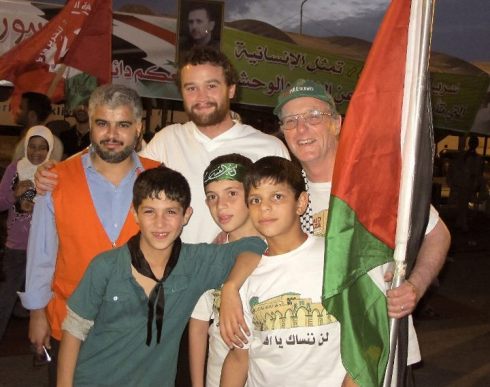
Almost three years ago Israel’s military onslaught in Gaza, codenamed Operation Cast Lead, killed over 1,400 mostly civilian Palestinians and laid waste to the coastal enclave.
Today, most Gazan families suffer from mass unemployment, medical shortages, polluted water, devastated housing, continual Israeli attacks and other dire conditions. Worst of all, Gaza’s 1.5 million population remains imprisoned by an illegal and cruel Israeli blockade.
Kia Ora Gaza is sending a four-person Kiwi Team on the sixth Gaza aid convoy organised by UK charity Viva Palestina. This multinational convoy aims to enter Gaza on the third anniversary of the start of Operation Cast Lead, 27 December.
“It is our intention with this convoy to try to increase the aid element,” says Viva Palestina in a statement issued yesterday. “We are also taking into account the fluid situation that has developed since the start of the Arab Spring and the fall of Mubarak. ”
“We are announcing therefore a significant change in the form that the convoy will take this time. Rather than travelling from London through Europe as before, we intend to purchase all aid and vehicles in Egypt itself.”
All volunteers, including our Kia Ora Gaza team, will travel to Egypt and join the convoy in Cairo on a date to be confirmed by Viva Palestina over the next few weeks.
This change in plan will play well with the Egyptian democracy movement which is hugely supportive of Gaza’s call to break the Israeli siege. It should help December’s convoy link up with Cairo’s democracy activists so there is a combined push to permanently open Egypt’s Rafah crossing with Gaza.
If the Rafah Gate can be swung open to all people and goods going in and out of Gaza, then the Israeli siege will be mortally wounded. That would be the most fitting response by the world’s humanitarians on the third anniversary of Operation Cast Lead.
Your donations can bring us closer to this objective. Kia Ora Gaza has launched a $50,000 Gaza Appeal to fund our Kiwi convoyers and their aid to suffering Palestinians. Please donate generously to our moral and historic mission.
Go to the sidebar of kiaoragaza.net to see how to donate.
Monday, 10 October 2011
Will capitalism survive the crisis?
by Geoff Fischer
Will the political institutions of capitalism survive the current economic
crisis? That is the question which many of us are being asked. The simple
answer is that those institutions (states or governing parties) which preside
over social systems in which wealth is evenly distributed are best fitted to
survive, while those which preside over divided, unequal societies face
extinction.
So where does New Zealand stand? To answer that question we need to
understand the basis of the New Zealand state, which arose out of the
colonial project of the New Zealand Company in the early ninteenth century.
The New Zealand Company was a private immigration company founded for the
explicit purpose of establishing a class-based British-dominated colonial
society in the south seas. The colonial project has subsequently evolved into
the concept that goes by the name of "New Zealand Inc".
From quite early on the state (originally the imperial authorities in London,
and latterly the colonial government in Wellington) presented itself as a
moderating influence upon the colonial project. However there have been
crucial moments in history when the state has left off being moderate or
neutral, to overtly ally itself with the commercial interests of the New
Zealand Company.
Will the political institutions of capitalism survive the current economic
crisis? That is the question which many of us are being asked. The simple
answer is that those institutions (states or governing parties) which preside
over social systems in which wealth is evenly distributed are best fitted to
survive, while those which preside over divided, unequal societies face
extinction.
So where does New Zealand stand? To answer that question we need to
understand the basis of the New Zealand state, which arose out of the
colonial project of the New Zealand Company in the early ninteenth century.
The New Zealand Company was a private immigration company founded for the
explicit purpose of establishing a class-based British-dominated colonial
society in the south seas. The colonial project has subsequently evolved into
the concept that goes by the name of "New Zealand Inc".
From quite early on the state (originally the imperial authorities in London,
and latterly the colonial government in Wellington) presented itself as a
moderating influence upon the colonial project. However there have been
crucial moments in history when the state has left off being moderate or
neutral, to overtly ally itself with the commercial interests of the New
Zealand Company.
Monday, 3 October 2011
Sunday, 2 October 2011
US occupations: links
The Wall Street occupation, now nearing the end of its third week has sparked a series of protests across the USA. Like the revolutionaries in North Africa and the Middle East, the protesters have made extensive use of the internet, social media and communication technology. Below are links to three websites where you can keep up to date with the protests.

OccupyWallStreet

http://www.occupytogether.org/
 Stories from those joining the protest:
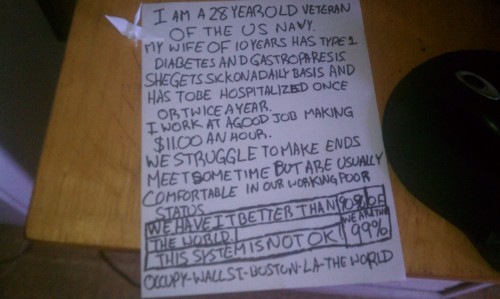
“We are the 99 percent. We are getting kicked out of our homes. We are forced to choose between groceries and rent. We are denied quality medical care. We are suffering from environmental pollution. We are working long hours for little pay and no rights, if we're working at all. We are getting nothing while the other 1 percent is getting everything. We are the 99 percent”
A spotlight on Wall Street greed
Doug Singsen and Will Russell report from New York City on Occupy Wall Street.
From Socialist Worker US
September 28, 2011
 |
| New York police on a rampage against demonstrators from Occupy Wall Street (Brennan Cavanaugh) |
DAILY PROTESTS and an ongoing park occupation in the financial district of New York City are gaining growing national attention as an expression of anger against Wall Street greed--and now the brutality of police against demonstrators, after the NYPD savagely attacked a march from the encampment to Union Square on September 24.
The hundreds of people who have participated in Occupy Wall Street since it began September 17 are protesting economic inequality and the power wielded by banks and big corporations in U.S. society. The occupiers say they represent the 99 percent of society that is fed up with the massive wealth and corruption of the top 1 percent.
The initial demonstration drew some 500 people to Bowling Green Park, site of the famous Charging Bull sculpture that is a famous symbol of Wall Street. Organizers had hoped for thousands to turn out, but activists continued with their aim of establishing an encampment--it was set up in nearby Zuccotti Park.
The protesters renamed the park Liberty Plaza in homage to Tahrir (Liberation) Square in Cairo--the symbol of this year's Egyptian revolution. In a stroke of happenstance, it turned out Liberty Plaza was actually the original name of Zuccotti Park.
The number of regular participants began to build over the week that followed, but interest turned intense after the September 24 police attack on marchers from the encampment.
More than 1,000 activists had started the Saturday with a march on Wall Street, before turning around and heading north, peacefully marching more than two miles to reach Union Square. There, they were met by a massive police resistance.
Thursday, 22 September 2011
Predictable and surprising: an overview of Mana policy
by Grant Morgan
21 September 2011
The Mana Party's consolidated policy document was recently released (see below). Its contents are both predictable and surprising. Here's a concise overview:
The document is predictably strong on "bread and butter" issues for Maori and workers, but invisible on their political "agency" in changing the system.
The Mana Party's consolidated policy document was recently released (see below). Its contents are both predictable and surprising. Here's a concise overview:
The document is predictably strong on "bread and butter" issues for Maori and workers, but invisible on their political "agency" in changing the system.
- There are eight references to Maori, 10 to worker/s, and three to union/s. All these references are solely economic in character. So Maori, workers and unions are not given any political role in a systemic transition away from capitalism, or even away from the current neoliberal stage of capitalism.
- Accordingly, there is not a single reference to "capitalism", "capitalist", "neoliberal" or even "class". And just one passing reference to "market". Despite the presence of many self-described socialists within Mana, no mention is made of the words "socialism" or "socialist".
- Nevertheless, there are important policy assaults on financialisation, which is the central pillar of neoliberalism. So the document advocates the abolition of GST, the introduction of a financial speculation tax, reduced income tax for the poor and steeper income tax for the wealthy, a capital gains tax and other tax policies which would confront financialisation without mentioning the words "neoliberalism" or capitalism".
- Overall, the document is reasonable on immediate "bread and butter" issues, but sidesteps the questions of political economy and political "agency". The inference is that voters should leave politics in the hands of Mana politicians, since nobody else is given a system change role. My mark: B+.
It is surprisingly weak on Te Tiriti o Waitangi and tino rangatiratanga.
- The treaty/tino rangatiratanga are linked four times to constitutional matters. But these references are very brief and abstract, leaving no meat on these constitutional bones.
- Plus there are two references to the treaty in regards to economic matters.
- Overall, a disappointing result from a party whose main membership consists of flaxroots Maori steeped in Te Tiriti and tino rangatiratanga. My mark: C.
And it is predictably woeful on ecological matters.
- There is not a single reference to "ecology" in the policy document.
- There is just one passing reference to "ecological" in a sentence where it's buried under social, economic and spiritual issues.
- The word "environment" appears three times, but only in reference to our social/legal environment, not the world of nature.
- The word "environmental" appears twice, but only in passing and buried under social, cultural and economic issues.
- The word "sustainable" is used three times each in reference to transport and housing, which of course intersect with the natural environment, but the linkage is weak in the document. Mostly there's an economic aura given to "sustainable", which also appears five times in direct reference to the economy.
- Climate change is probably the gravest emergency facing humanity today, threatening catastrophes on a primeval scale. Incredibly, Mana's manifesto makes merely two references to climate change/global warming. And one reference is merely economic, referencing the monetary cost of climate change policies. The other reference is part of a general statement on a post-oil future.
- Overall, a disjointed, abstract and unconvincing approach to ecology. There's no sense that systemic alternatives to climate change and other capitalist erosions of the natural basis for life on Earth should be woven into every fibre of Mana's policy. My mark: C-.
Of course, we cannot define any party by way of its policy manifesto alone. Usually the social character and track record of party members, and especially party leaders, is at least as important.
But my overall impression of Mana's consolidated policy document is of punches pulled and opportunities missed in the arenas of political economy, political agency and constitutional remodeling. And, regarding the life-sustaining world of nature, I see a party manifesto that is lamentably weak, despite several disconnected references to a "post-carbon world".
Therefore, my overall mark for Mana's predictable and surprising manifesto would be somewhere between a B- and a C+.
I hope that Mana does well in this year's parliamentary election, though my hopes are based more on good people in the party than on this rather disappointing manifesto.
I also hope that the Green Party and candidates from Labour's left wing do well at the polls, and that they get together with Mana to start forging a Left Bloc that at the very least begins to roll back neoliberalism and tackle climate change.
Monday, 19 September 2011
Saturday, 10 September 2011
Derek Wall: Ecosocialism cuts to roots of ecological crisis
British-based economist, activist and writer Derek Wall is a member of the Green Party of England and Wales and is the author of several books on ecology and politics.
Wall will speak via video link at the Climate Change Social Change activist conference in Melbourne over September 30 to October 3. He maintains the ecosocialist blog Another Green World.
He spoke to Green Left Weekly’s Simon Butler about the politics of ecosocialism.
What are the most valuable insights ecosocialists can bring to discussions about the source of our ecological problems?
Ecosocialism, without being reductionist, cuts to the roots of the ecological crisis. The destruction of the environment is not an accident. It is not simply a problem of false ideas and it is not a product of inappropriate policies that can easily be dealt with by electing a new set of politicians.
The assault on the basic life support system of our planet, the basic biological cycles, climate being just one, is caused by our economic and social system. We live in a capitalist society and capitalism tends towards the destruction of the conditions necessary to sustain life.
Monday, 5 September 2011
Taking control of our destiny
SOCIALISM made the headlines locally and at a national level last week. The Prime Minister explained his admission that a socialist streak runs through New Zealanders by acknowledging he too holds socialist ideals. And an aspiring mayoral candidate blamed socialists on Gisborne District Council for the increase in his rates demand, which he thinks is a form of wealth tax. Of course, he failed to mention his properties are collectively worth many millions of dollars and the proportion of his rates to property value is less than one tenth of what the vast majority of us contribute.
As Noam Chomsky has pointed out, “the term socialist has been so evacuated of content over the last century that it’s hard even to use in any sensible way. The Soviet Union was called a socialist society by the two major propaganda powers in the world at the time. The West called the Soviet Union socialist to defame it by association with the miserable tyranny and the Soviets called it socialism to benefit from the moral appeal that true socialism had among large parts of the general world population”.
But the Soviet Union was about as remote from socialism as you can imagine. The core notion of traditional socialism is that working people have to be in control of production and communities have to be in control of their own lives. The Soviet Union was the exact opposite of local control, the working people were virtual slaves. Chomsky suggests the collapse of the Soviet Union was in fact a great victory for socialism.
There are attempts today to describe a detailed vision of a socialist future and some of the most extensive and detailed are examples like Participatory Economics, and the moves toward an extension of democracy to the industrial sphere through worker-owned co-operatives.
Philosopher and educationalist John Dewey’s main work concentrated on democracy and he pointed out that as long as we have industrial feudalism — that is, private power controlling production and commerce — our democracy will be very limited. We have to move to what he called industrial democracy if we hope to have democracy of any significance.
The way for individuals to realise the democracy “in their own hearts” was through community. As Dewey wrote, “it is through association that man has acquired his individuality and it is through association that he exercises it. The theory which sets the individual over against society, of necessity contradicts itself.”
Dewey believed that direct participation in a democracy would foster an unexpected talent for thoughtful deliberation in ordinary citizens.
“We lie in the lap of an immense intelligence,” he said. The difficulty was to unleash this intelligence, which remained dormant until “it possesses the local community as its medium”. In The Public and its Problems — Dewey’s only work of formal political philosophy — he outlined an elaborate programme of truly participatory democracy, one built around face-to-face interactions in “neighbourly communities”.
Socialism is the idea that people should be in control of their own destiny and lives, including the institutions within which they work and the communities within which they live. This is the potential and my vision for local government.
So when the label socialist gets used pejoratively by people who should know better, I hope John Key is correct, that New Zealanders do all have a socialist streak and we are proud of that commitment to local, egalitarian democracy that protects us from the tyranny of both big business and big government.
Kiwis to join siege-busting convoy to Gaza in December

5 September 2011
As the historic “Arab Spring” surge for democracy sweeps across northern Africa and the Middle East, the time has come for a renewed international push to finally break the cruel & illegal Israeli siege of Gaza.
The Egyptian people have overthrown the military dictator Mubarak and are demanding that the Rafah border gates with Gaza be permanently opened to allow for the free flow of people and goods.
In tune with this epic era, the Viva Palestina 6 international aid convoy to Gaza, due to depart London in early December, is set to become a major factor in breaking the siege for all time. The permanent opening of the border will be the greatest form of aid for the besieged 1.5 million Palestinian people of Gaza.
All of Viva Palestina’s previous land convoys have successfully entered Gaza. As well as bringing millions of dollars of desperately needed medical and humanitarian aid, VP has been told by people in Gaza and by supporters of the Palestinians in Egypt that they have helped play a role in highlighting the unjust policy of the now ousted Mubarak regime in maintaining the siege.
The democratic revolution in Egypt opens the prospect of ending that siege for good. The convoy will be working in partnership with humanitarian organisations in Egypt to help bring that about before another year of unnecessary suffering is inflicted on the Gazans subsisting in what British prime minister David Cameron described as the world’s largest open air “prison camp”.
Kiwi Team invited to join historic mission
Kia Ora Gaza has been invited to send a New Zealand contingent to join this historic international mission. A 6-person Kia Ora Gaza team took part in the Viva Palestina 5 aid convoy, which broke through the siege in October last year, so we have a proven track record.
Our target: $70,000
Kia Ora Gaza is launching a nationwide fund-raising appeal to send another team of 6 Kiwis to join this siege-busting convoy from London.
Our target is $70,000 which will cover flight costs and purchase of NZ convoy vehicles and humanitarian aid.
We have less than 3 months to do so. Our success depends on the generosity of spirit of humanitarians like yourself.
Kia Ora Gaza is a charitable trust whose entire funds go to the sole benefit of the people of Gaza. All helpers are unpaid volunteers. All our accounts are subject to audit by a professional auditor (donating his services free) who is independent of our Board of Trustees.
Please send your donation by direct credit to our bank account: Kia Ora Gaza, 03-0211-044718-000, Westpac Bank, Onehunga Branch.
(Then email office@kiaoragaza.net with your deposit details so our Board of Trustees can send you an e-receipt.)
Or write a cheque for “Kia Ora Gaza” and post it to Kia Ora Gaza, PO Box 59007, Auckland.
Volunteer applications
Kia Ora Gaza invites New Zealanders to apply to be part of our 6-person Kiwi Team to Gaza. Application emails, containing your contact details, skill levels and personal history, should be sent to office@kiaoragaza.net by Monday 19 September.
Applications are open to New Zealanders from a wide range of backgrounds. You will need a current international car licence, hold a New Zealand passport and have no criminal history. You will be:
- a co-operative “team player”,
- passionate for peace and justice in Palestine,
- reasonably fit & healthy,
- over 23 years old,
- prepared to share your convoy experiences at public meetings & in media interviews,
- able to cope with difficulties & challenges,
- able to cover your personal expenses (estimated to be NZ$3,000).
Forward this notice to all your friends and ask them to do likewise.
If you have a blog, facebook page or Twitter – make the story viral.
Join the Kia Ora Gaza facebook group.
Attend or organise support meetings or fund-raising events.
Ask your church, mosque, marae, union or community group to offer a donation & message of support.
Visit our website kiaoragaza.net for regular updates.
Friday, 2 September 2011
Gaza: uneasy UN report and another aid convoy
The Palmer Commission, headed by former NZ prime minister Geoffrey Palmer, was appointed by the UN secretary-general to examine the Israeli attack on Gaza aid ship Mavi Marmara in May 2010. Nine humanitarian volunteers, eight of them Turkish and one Turkish-American, were killed by Israeli special forces who stormed the vessel in international waters during the dark of night.
After a number of delays, the final report by the Palmer Commission is due for release tomorrow (Friday, 2 September 2011). According to media reports, its conclusions look likely to be an uneasy compromise between Israel and Turkey, both represented on the equally balanced commission.
As we await the official release of the Palmer Commission's report, Kia Ora Gaza is sending you a backgrounder on Israel's disputed, but clearly bloody, seizure of the Mavi Marmara. It's from Gisha, the Israeli-based Legal Centre for Freedom of Movement (previously published on our website kiaoragaza.net). This legal opinion may help you identify where the legal facts lie in a tragedy which has been, and still remains, highly disputed and incredibly propagandised.
As well, Kia Ora Gaza is pleased to announce that we expect to take part in another international aid convoy to Gaza within the next few months. We will announce more details as planning is finalised. We are now calling for your donations to help fund our mission, made more important by the Arab Spring and the subsequent possibility of levering open Israel's terrible blockade of Gaza.
Are you able to donate to Kia Ora Gaza's next mission to aid the 1.5 million innocents of Gaza and break Israel's inhumane and unlawful siege? If you can spare some cash, please make a direct payment to our bank account:
Kia Ora Gaza, 03-0211-0447718-000, Westpac Bank, Onehunga branch (Afterwards, email office@kiaoragaza.net with your deposit details so our Board of Trustees can send you an e-receipt.)
Or else write a cheque for ‘Kia Ora Gaza’ and post to: Kia Ora Gaza, PO Box 59-007, Auckland. (And enclose your address or email so we can send you a receipt.)
Thank you,
Grant Morgan
Co-organiser of Kia Ora Gaza PO Box 59-007, Auckland, New Zealand 021 2544 515 office@kiaoragaza.net kiaoragaza.net
After a number of delays, the final report by the Palmer Commission is due for release tomorrow (Friday, 2 September 2011). According to media reports, its conclusions look likely to be an uneasy compromise between Israel and Turkey, both represented on the equally balanced commission.
As we await the official release of the Palmer Commission's report, Kia Ora Gaza is sending you a backgrounder on Israel's disputed, but clearly bloody, seizure of the Mavi Marmara. It's from Gisha, the Israeli-based Legal Centre for Freedom of Movement (previously published on our website kiaoragaza.net). This legal opinion may help you identify where the legal facts lie in a tragedy which has been, and still remains, highly disputed and incredibly propagandised.
As well, Kia Ora Gaza is pleased to announce that we expect to take part in another international aid convoy to Gaza within the next few months. We will announce more details as planning is finalised. We are now calling for your donations to help fund our mission, made more important by the Arab Spring and the subsequent possibility of levering open Israel's terrible blockade of Gaza.
Are you able to donate to Kia Ora Gaza's next mission to aid the 1.5 million innocents of Gaza and break Israel's inhumane and unlawful siege? If you can spare some cash, please make a direct payment to our bank account:
Kia Ora Gaza, 03-0211-0447718-000, Westpac Bank, Onehunga branch (Afterwards, email office@kiaoragaza.net with your deposit details so our Board of Trustees can send you an e-receipt.)
Or else write a cheque for ‘Kia Ora Gaza’ and post to: Kia Ora Gaza, PO Box 59-007, Auckland. (And enclose your address or email so we can send you a receipt.)
Thank you,
Grant Morgan
Co-organiser of Kia Ora Gaza PO Box 59-007, Auckland, New Zealand 021 2544 515 office@kiaoragaza.net kiaoragaza.net
Subscribe to:
Posts (Atom)